
Merging B2B legacy tools
A consolidation of two existing tools into a brand new web application and a look into one of the most used features
OVERVIEW
I was tasked with merging two existing B2B web applications into a new, unified solution to streamline workflows. Both tools managed commercial real estate asset lifecycles: one analyzed which equipment assets (ex. HVACs, heat pumps) to replace, and the other prioritized replacements within client budget limitations.
MY ROLE
As the sole designer, I owned the full lifecycle of the new web application— from research and information architecture to wireframing, prototyping, user testing, and final UI specifications—while partnering closely with product management and engineering to bring the product to launch.
Discovery
Gathering user feedback and business goals to understand the existing problems
Business goals
The goal was to combine two existing tools into one streamlined platform to improve efficiency and reduce the cost and effort of maintaining multiple systems.
User analytics & user interviews
I partnered with the Product Manager to analyze usage data and determine which features were most critical across both tools.
I then conducted in-depth user interviews to uncover how users integrated the tools into their workflows, what were important to them, and what were their pain points and needs.
Combining quantitative and qualitative insights, we aligned on the core functionality required for the MVP.
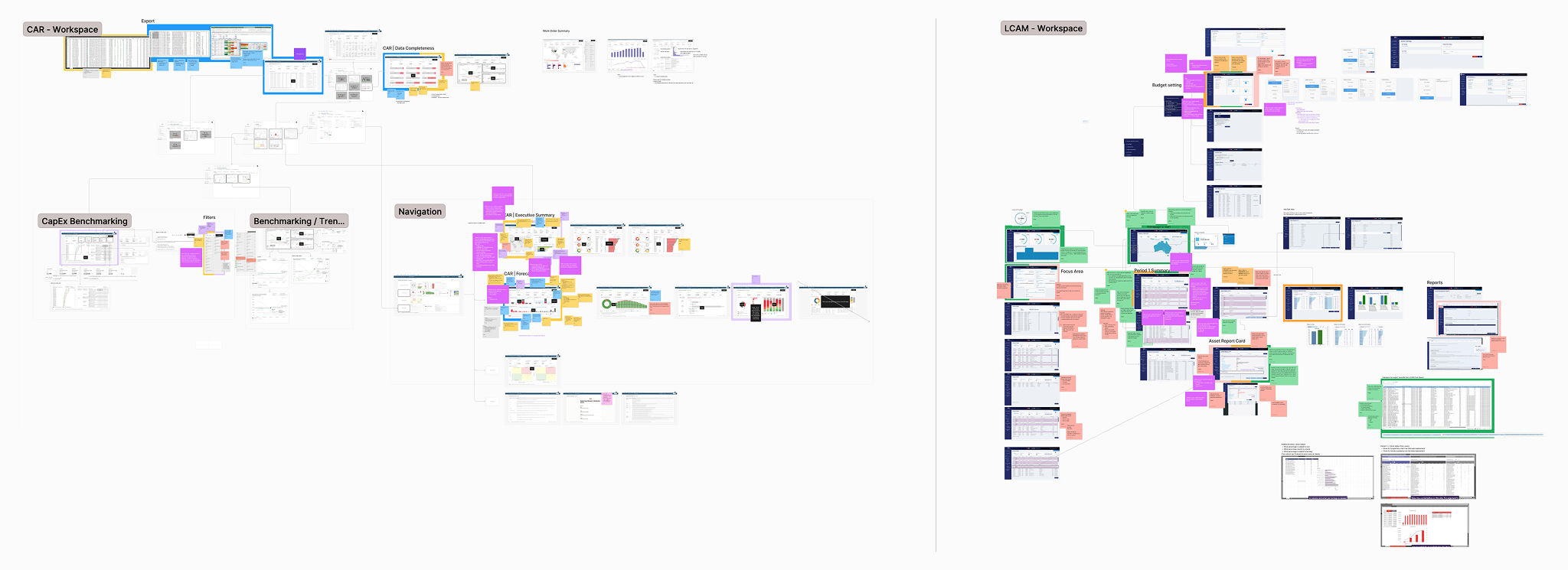
I translated these findings into a comprehensive visual system map and research summary outlining usability gaps, pain points, and opportunities—creating a foundational document that guided stakeholder alignment and product decisions throughout development.

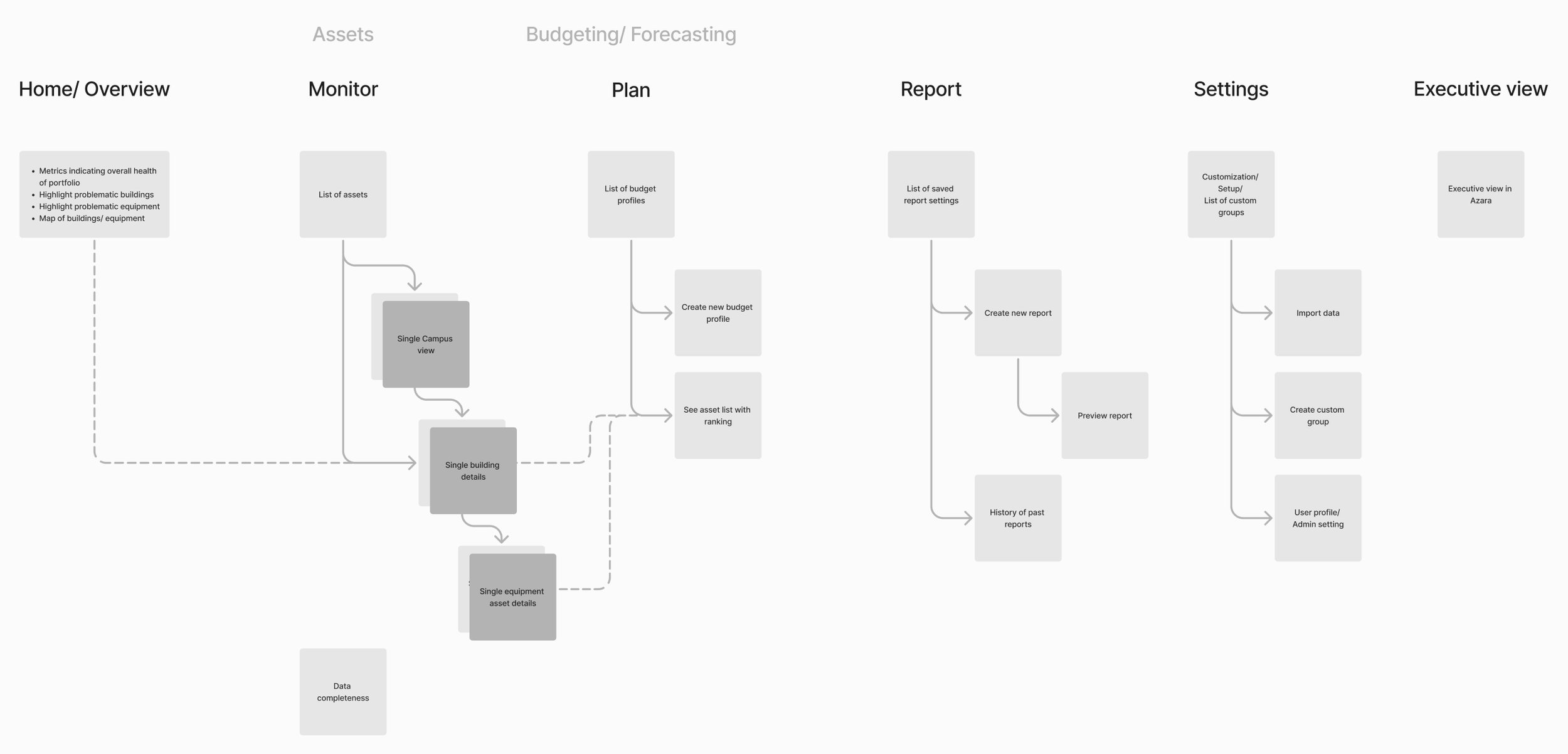
After aligning on the MVP scope, I developed the information architecture to ensure the new tool delivered a cohesive and holistic user experience.
I then took a deeper dive into key features to better understand user pain points and needs. One of the most frequently used features was the asset detail view, which became a primary focus.
The example below highlights the design process behind reimagining the asset detail experience.
Problem on asset detail view
Currently, users utilize other tools to gather additional information about an asset. How might we provide a holistic view of the asset without overwhelming users?
Users want to keep track of decisions on an asset to communicate with clients effectively. How might we provide an audit trail for easy reference and accountability?
Who are the primary users?
“With thousands of assets and a limited budget, how do I effectively prioritize and recommend assets for replacement to my clients?”
Cameron, Reliability Engineer (internal company staff)

User background:
The main users of the new web application are internal company staff with job titles such as Reliability Engineers. They act as advisors to their clients.
They are tasked to monitor thousands of equipment assets and make recommendations to clients on what assets to replace during the budget planning cycle
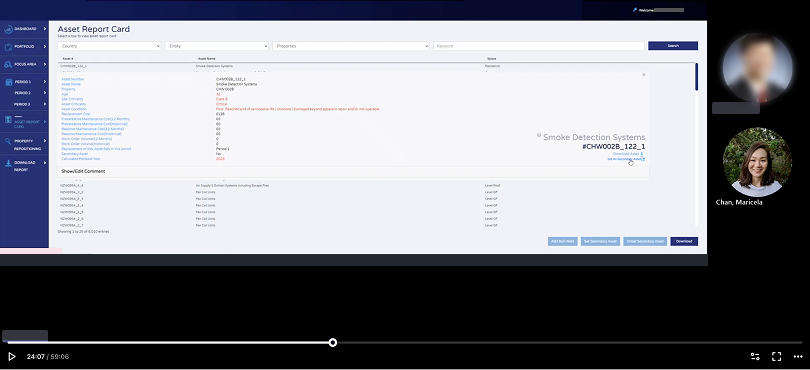
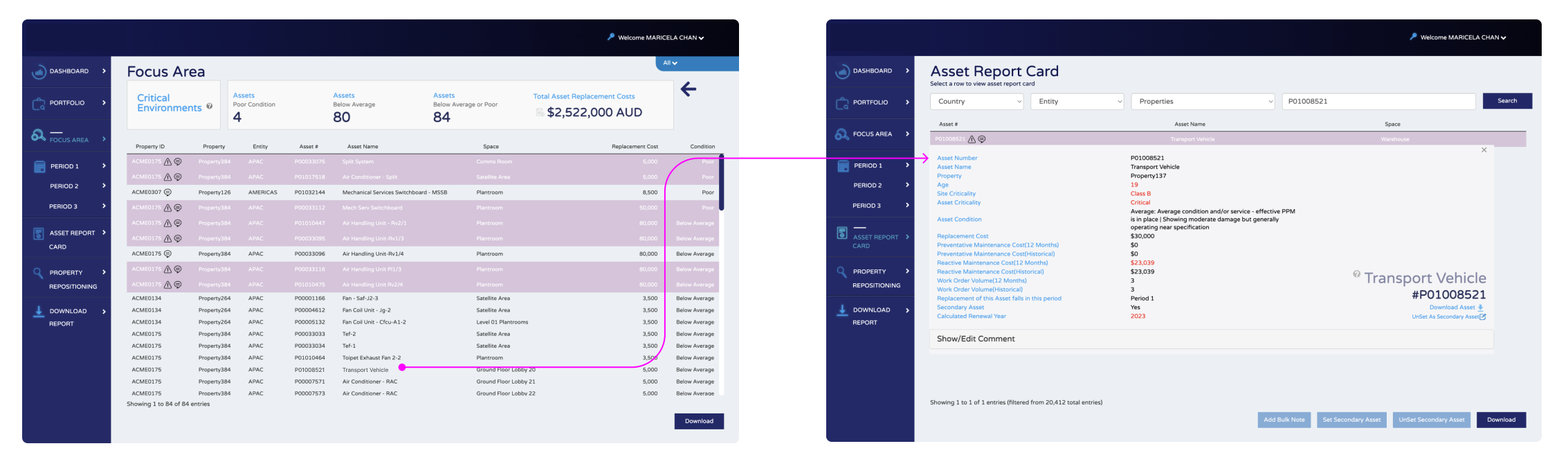
Legacy asset detail view
The legacy “Asset report card” and flow was documented here for reference.
Ideation
Brainstorming and testing out solutions quickly
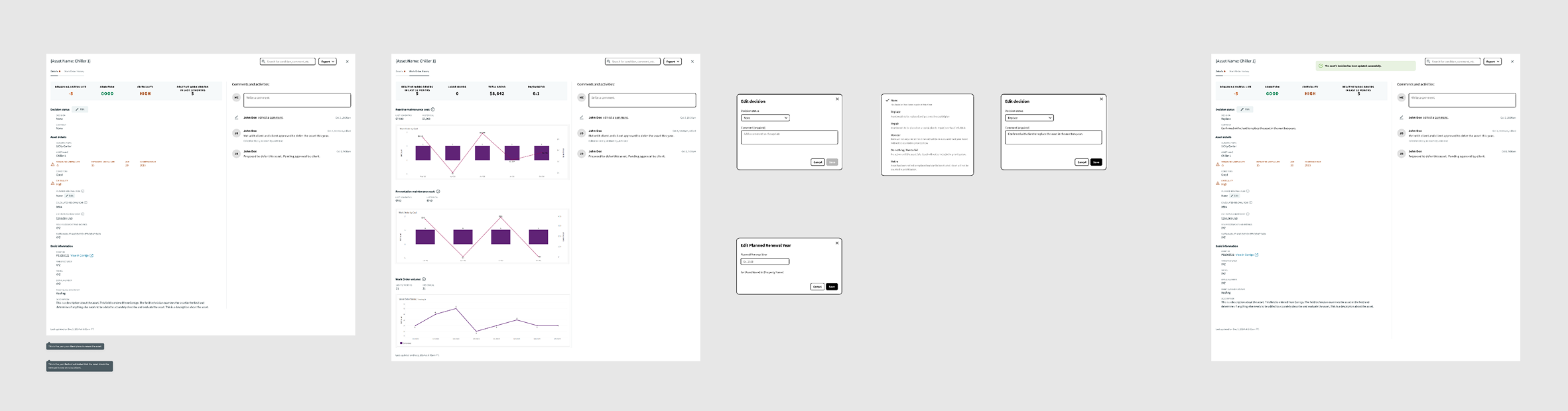
WIREFRAMING
I developed wireframes based on user pain points and needs. The wireframes were turned into a clickable prototype for user testing.
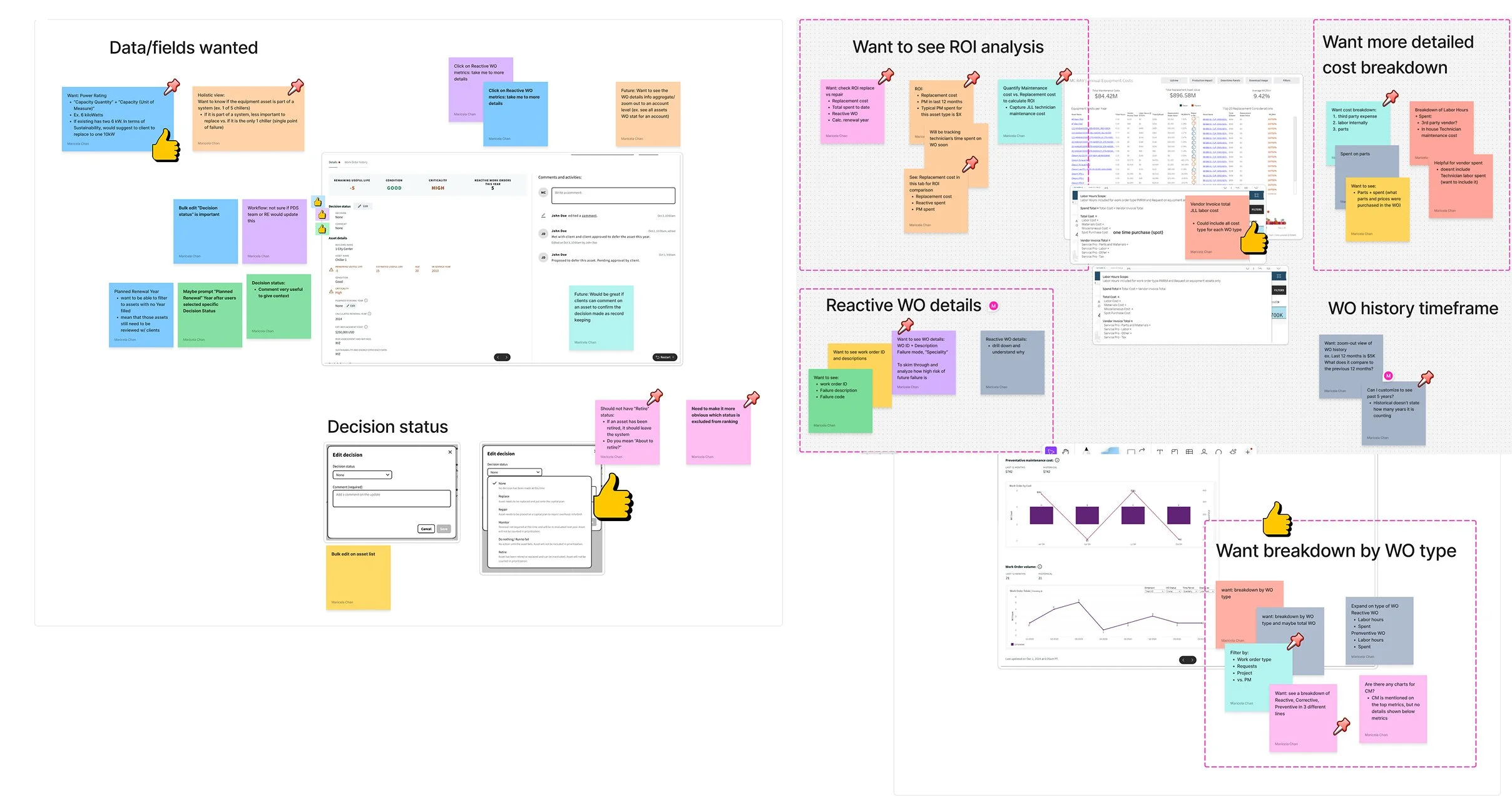
USABILITY TESTING
Based on user feedback on the wireframes, I generated post-it notes and organized the feedback into themes. This was presented to key stakeholders. The artifact was impactful as key stakeholders often revisit this as a reference.
FINAL DELIVERABLES
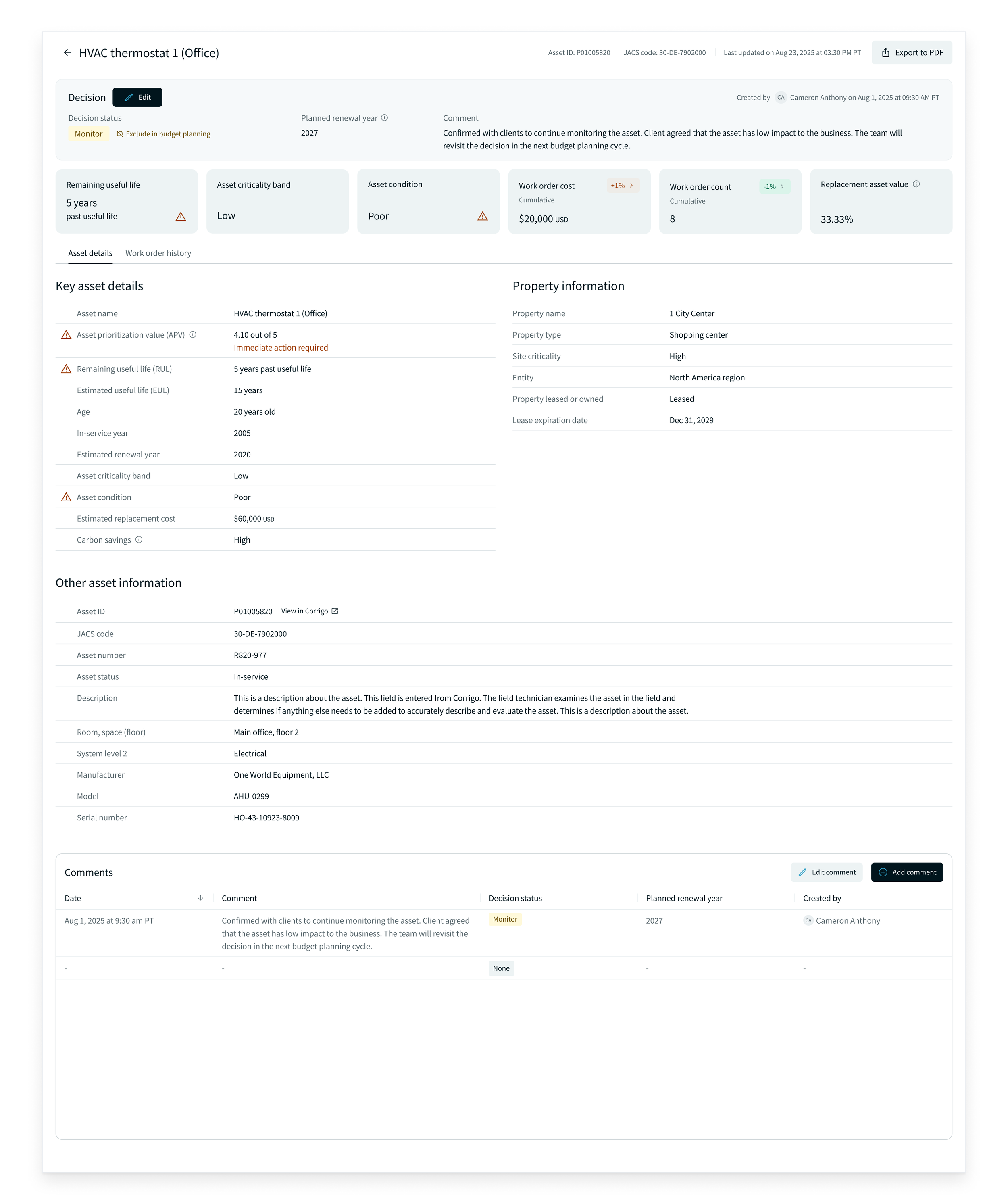
After aligning the designs with all stakeholders (Product and Engineering), I developed high-fidelity designs following company style guide. I collaborated with engineers to implement the final designs. When a build was ready, I worked with engineers on design QA.
Goal — One-stop shop to improve efficiency and accountability
The final UIs were created referencing company’s design style guide to ensure a cohesive experience across all platforms and met ADA accessibility requirements.
One-stop shop to view details
As noted in our research, users had to switch to other applications to gather the information they needed to decide if the asset should be replaced or not. Switching to other applications created inefficiency.
Solutions
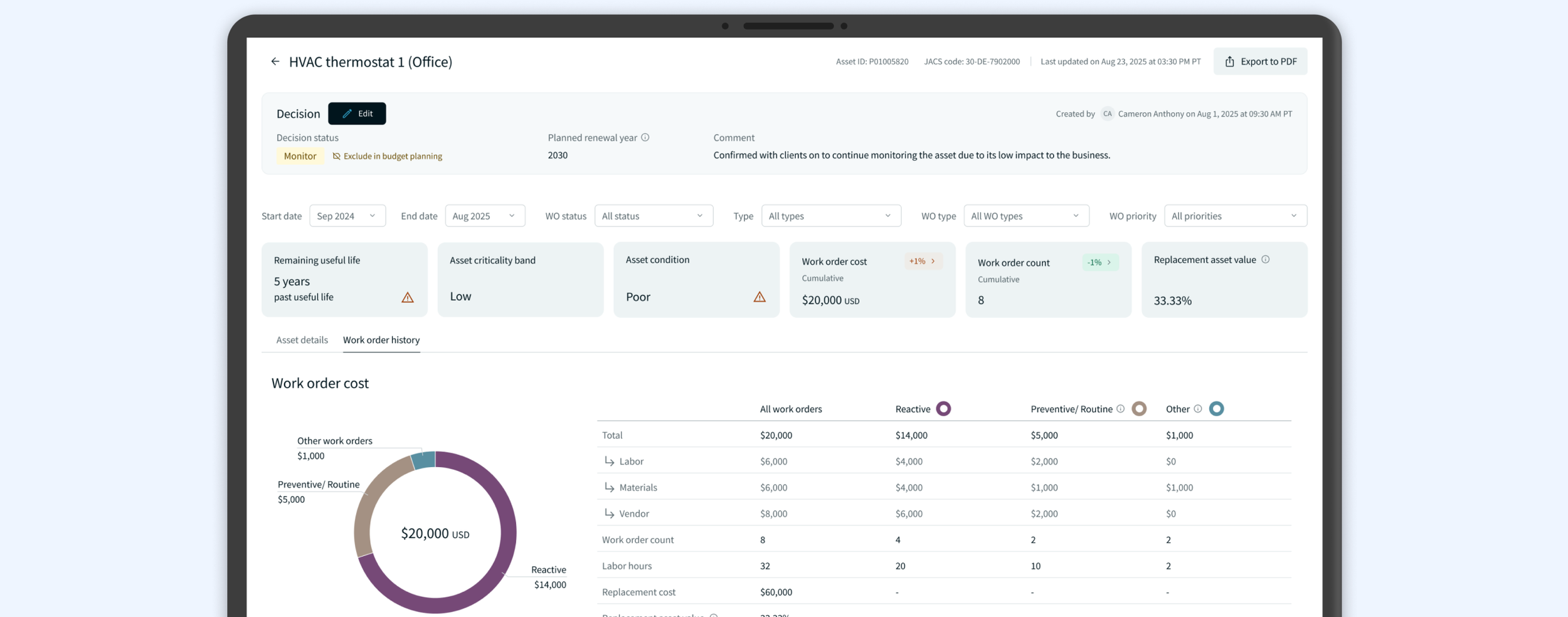
In the redesign, I included asset details that are crucial in helping users make a decision on an asset effectively. Asset details that are frequently requested by clients are highlighted at the top. Data that is outside of the normal/expected range are highlighted for easy scanning. Data is broken down into digestible sections to provide better organizations and enhance easy scanning.
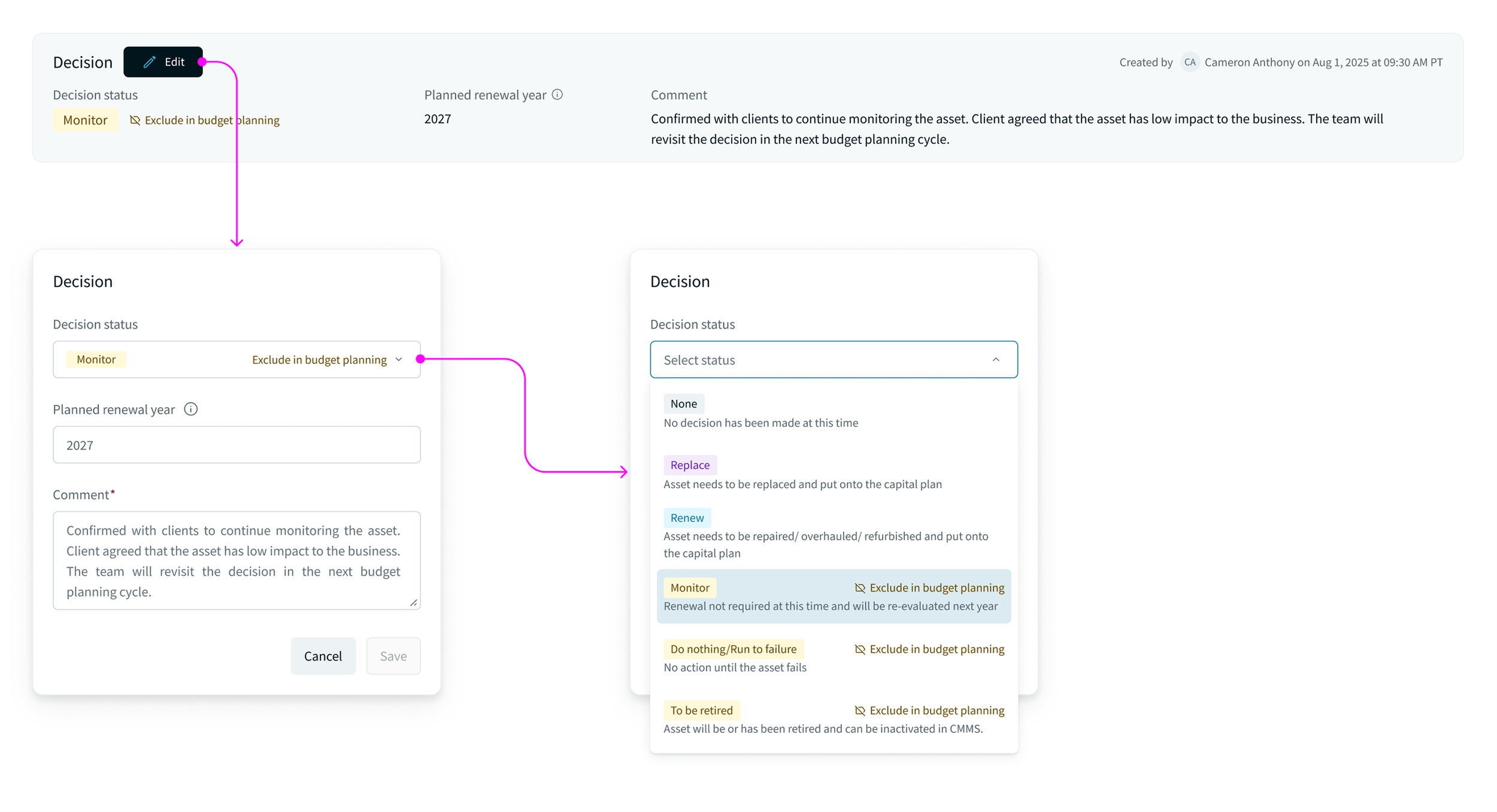
Audit trail to improve communication
Previously, users used comments to keep track of an asset’s decision. Comments were hidden under a click and easily missed.
Solutions
In the new design, a new "Decision" section provides an audit trail on asset decisions. Users can keep track of the approval history easily for more effective communication with clients.
From high-level view to detailed view
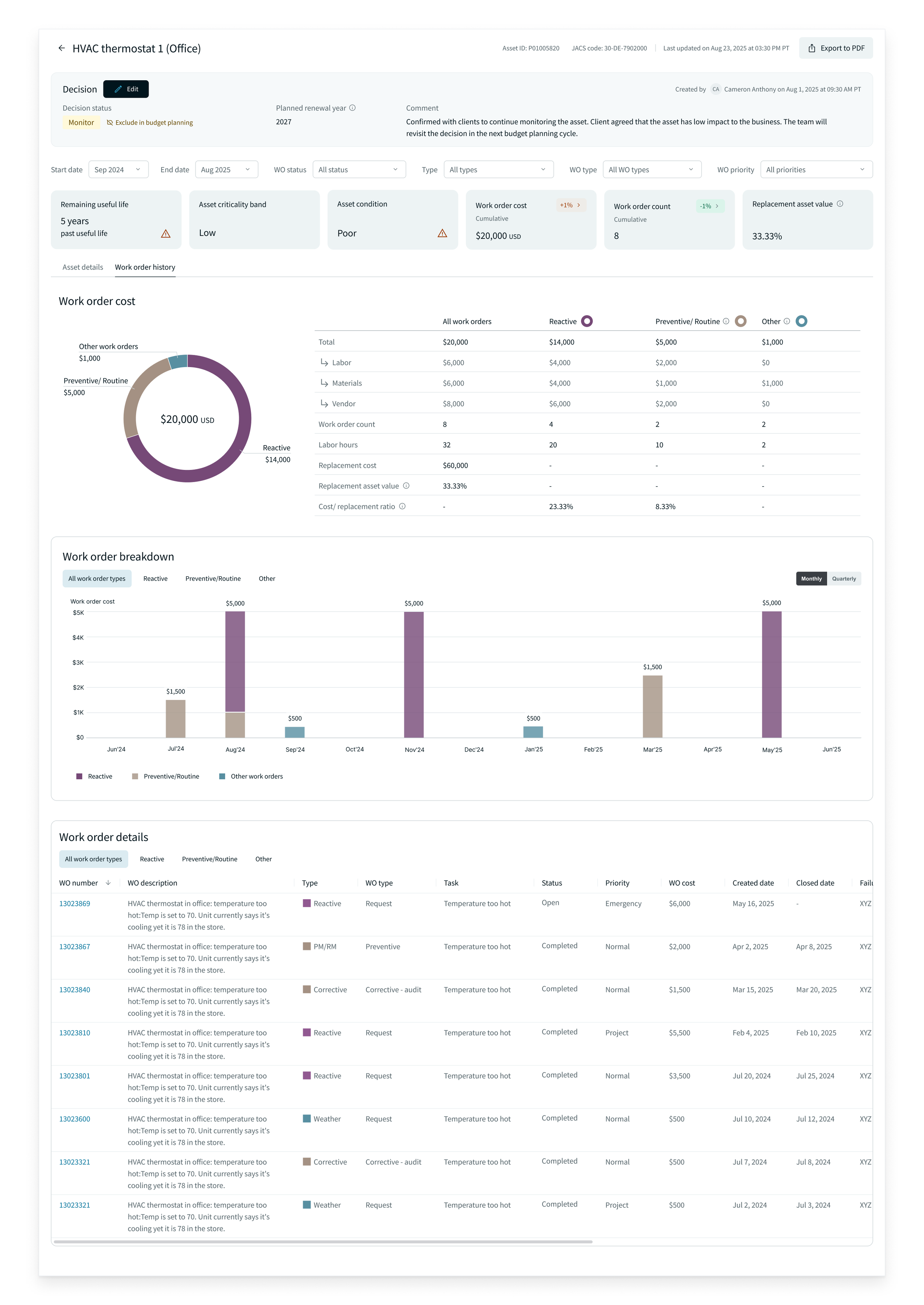
Based on user interviews, users needed a lot more details related to works or repairs done on an asset to assess its future risk of failure. Users had to switch to another application to gather that information in the old design.
Solutions
The new design includes more details on the works/repairs done. The page layout is organized to help users compare data easily between different types of works/repairs done. The top of the page provides a high-level view of the most important work types done so users can understand the “big picture” first. At the bottom of the page, it provides a detailed view of works/repairs done for users to dive into the details if needed.
Impact and outcome
Business
I conducted user interviews after redesign. Users were excited and satisfied with the additional data provided that provided a holistic view. They no longer needed to switch to other tools to see the details, thus improving efficiency and productivity. Additionally, some users commented that the new “decision” feature was a game changer on how they manage client relationships.
What I learned
Industry-specific context
Some data fields, such as the “Asset Prioritization Value”, are specific to the asset management industry. I tried to understand the context as much as possible, but sometimes new fields are added at the last minute. It is easy to miss the meaning behind these additions and just include them as requested. To avoid this, I did quick and informal user feedback sessions. I shared the UI designs with users via chat, and since they knew the data well and are familiar with the designs, they provided actionable feedback. The final check with users was quick and efficient. It saved time for the product and engineering team.
Keep new features lean
Keep new features simple — start with an MVP. With the new “decision” feature, the team focused on the main problem it solved. We did user research and user testing but we would not fully understand how users will interact it until it is released. So, it is more efficient to keep the new feature lean, track usage, and improve it later. Otherwise, the team could spend too much time on enhancement before releasing to the real world.